Building a keyboard stand isn’t just a practical task; it’s an exercise in problem-solving and creativity that reflects our approach to leadership and innovation. Here’s a story about simplifying a challenge that many musicians face, and how we can draw insights from that process.
The Challenge
I own an Alesis Recital 88-key keyboard, which has served me well. However, the portable folding metal stand I purchased back in 2020 has proven to be less than ideal. It’s wobbly, heavy, and cumbersome—a constant reminder that sometimes, convenience comes with a cost. The alternative offered by Alesis is sleek and appealing, but at $299, it feels more like a luxury than a necessity.
Why It Matters
For musicians, having the right setup is crucial. A sturdy stand enhances not only the playability of the instrument but also the overall experience. The right equipment can lead to greater creativity and productivity. If we think of a keyboard stand as a metaphor for the support systems we create in our organizations, it becomes clear that the quality of our foundations can significantly influence our performance.
Insights and Solutions
Here’s the plan I devised for a DIY alternative that balances function and cost:
- Height Consideration: The keyboard should sit at 30 inches from the floor to ensure comfortable playability.
- Dimensions: The width should match the keyboard precisely for stability.
- Materials: Using four angle brackets and machine screws to anchor the stand into the existing holes in the keyboard allows for a simple yet effective assembly.
- Support Design: A back support that is higher up—not flush with the floor—can enhance stability while accommodating the pedals. After some deliberation, I decided a single pedal suffices for now, simplifying the design.
- Comfort: A quality bench is essential. I opted for an adjustable stool that provides comfort and accommodates varying heights—an important detail when sharing the keyboard with kids.
The Build Process
Visuals can often communicate more than words. With a little help from Alexander, I set to work.
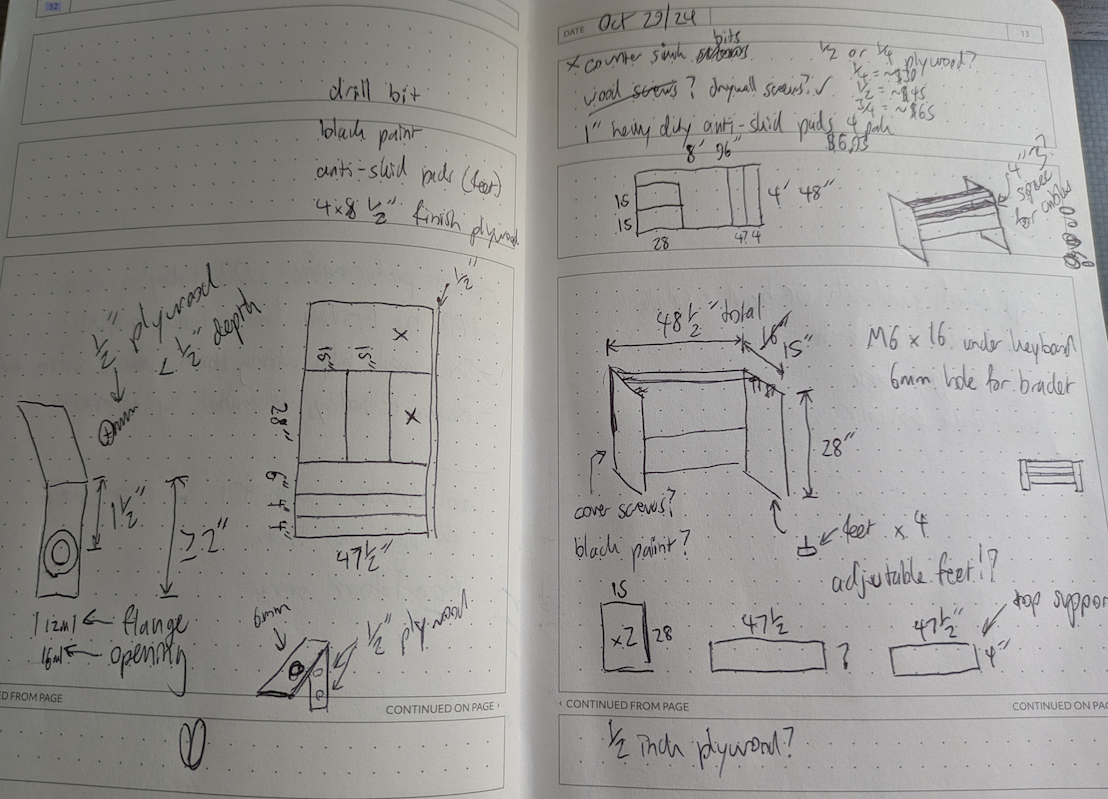
The design I created is self-supporting, eliminating the need for visible brackets. It’s clean and effective, reflecting the principle of clarity in design.
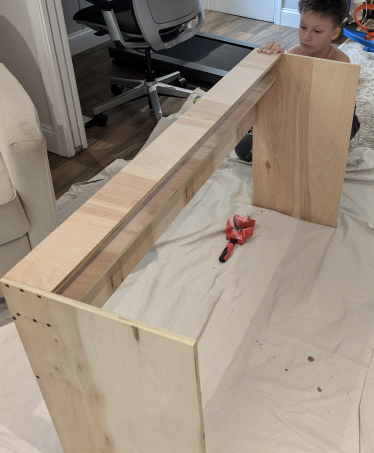
After a light sanding and a fresh coat of paint, the stand began to take shape.
Final Outcome
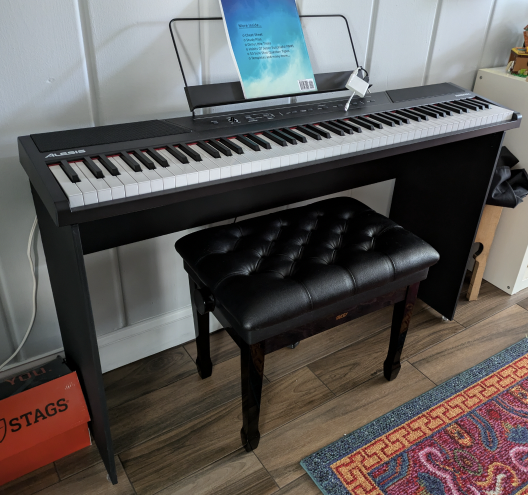
The result? A functional and aesthetically pleasing stand that cost roughly $75 in materials, plus about $40 for a comfortable, adjustable stool. This setup not only provides stability and ease of use but also demonstrates the power of thoughtful design.
The Takeaway
Building a keyboard stand is more than just assembling materials; it’s about creating a supportive environment for creativity to flourish. Whether in music or leadership, the principles remain the same: prioritize clarity, embrace iteration, and remain open to learning throughout the process.
So, the next time you face a challenge—whether it’s in your personal projects or your professional life—remember: sometimes, the simplest solutions are the most effective.